Payment
6/6/2025

5 minutes
Best practices for securing your customers' payment data and your e-commerce site


In 2024, the cybersecurity landscape grew darker: personal data breaches reported to the CNIL surged by more than 20%.
This figure reveals the scale of current digital vulnerability. Cyberattacks make headlines every day. As recently as May 2025, a global data leak exposed over 2.3 million bank cards. It follows leaks involving millions of customers from French brands in the luxury, telecommunications, banking, e-commerce, and government sectors. Personal and banking information then ends up on the dark web, where it is used to trap individuals, steal their identities, and misappropriate their funds.
For e-retailers, this reality is all the more critical as they handle sensitive payment data on a daily basis. Samuel Delplace, our Head of Infrastructure & Security, identifies the primary attack vector: the vulnerability of accounts and passwords.
For the past two years, the majority of intrusions have stemmed from compromised accounts due to passwords that were too weak or reused across multiple sites, both in professional and personal environments. Email and password pairs are stolen and traded within hacker communities. A single leak is enough for these credentials to be tested en masse elsewhere, until they find a site or a major brand's subcontractor where they can be used to extract data in bulk.
Faced with this reality, how can e-retailers strengthen their security while preserving the user experience?
This article presents the levers you can implement, inspired by regulatory requirements and operational best practices.
The principle of defense: just like protecting a house, the harder you make access, the more an attacker will favor an easier target. If every web player strengthens their security requirements, we collectively create a deterrent effect.
This feature allows users to sign up and log in via their Facebook, Google, or Apple ID accounts, eliminating the need for a site-specific password while providing a relatively quick connection.
This approach has the advantage of delegating authentication to already secure platforms, reducing the risk of phishing, and sparing your customers from having to remember yet another password.
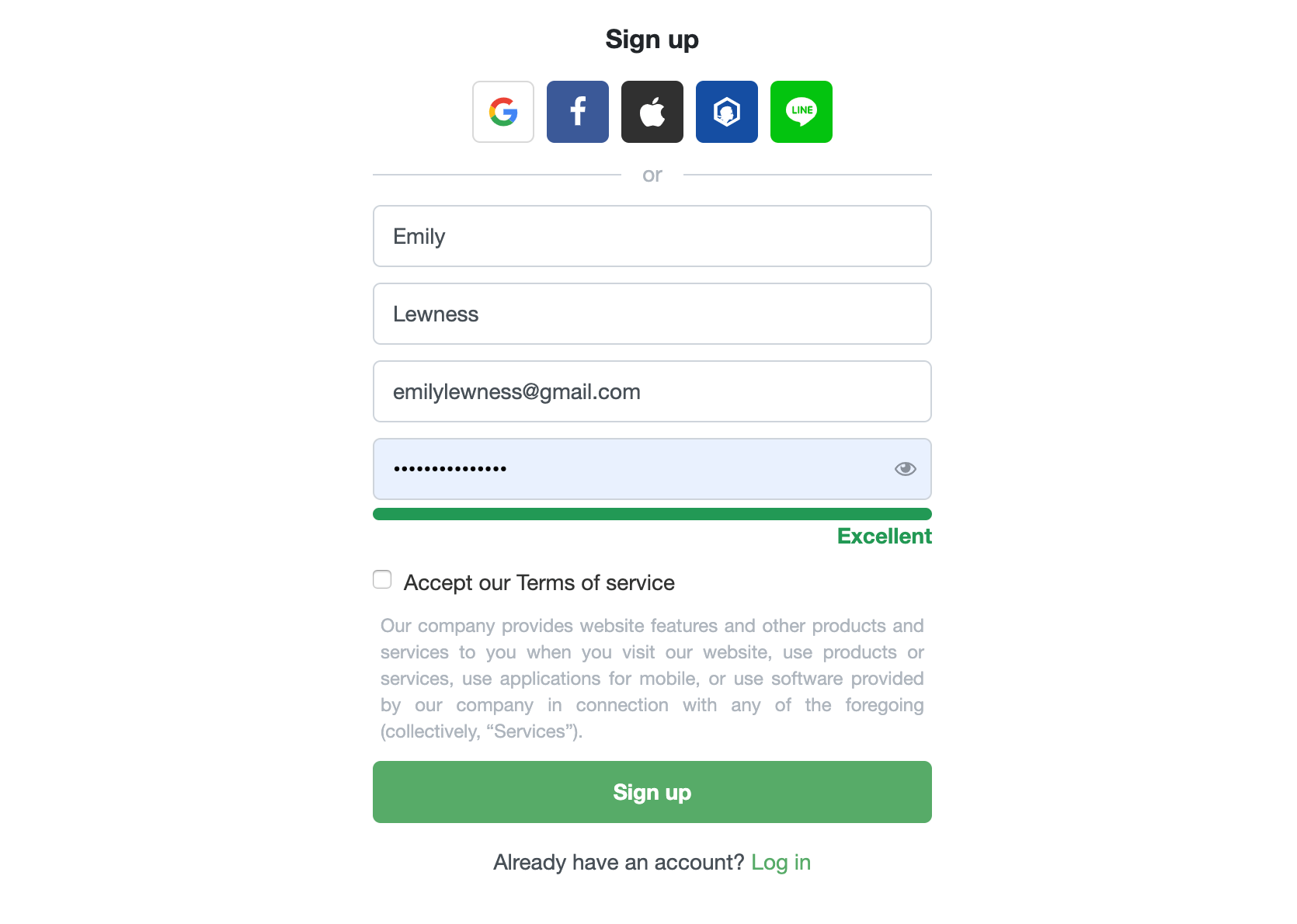
Whether for creating or renewing passwords, you can follow the recommendations from ANSSI :
It may seem obvious, but did you know that in France, the most commonly used passwords remain "123456", "123456789", and "azerty"?
Two-factor authentication remains the most effective method today for countering attacks involving compromised accounts. Even if an attacker has the correct credentials, they will not be able to access the account without the second factor (usually the user's smartphone).
Recommended options:
Take preventive action with your customers by detecting compromised passwords. Then, alert them as quickly as possible and recommend that they change their password.
You can use security technology solutions like ReachFive to ensure this protective monitoring is continuous.
The Payment Card Industry Data Security Standard is the international benchmark for all professionals involved in the entry, transfer, processing, and storage of card payment data. The goal of this standard is to ensure the highest level of security and to protect users' card data.
A fundamental rule applies to e-commerce sites: never store payment data. Never. Ever.
It is your responsibility to ensure that data is entered, transferred, processed, and stored in a secure, certified environment. The most effective strategy is to entrust this to a PCI-DSS Level 1 certified payment service provider (PSP) or payment orchestrator. You could implement a certified environment yourself, but it would be exceptionally difficult and costly.
As a merchant, you must be able to demonstrate to your acquiring bank that you meet the necessary requirements (the level of compliance depends on your transaction volume).
As the CIO of an e-commerce site, you generally need to:
Failure to comply with PCI-DSS requirements exposes your company to:
To learn more about the standard and the security requirements for your profile, you can visit the official website.
Choosing a trusted technology partner like Purse ensures you check all the boxes.
Your teams, subcontractors, and systems are prime targets for hackers.
Internal teams are often the weak link exploited by cybercriminals. For them, it is a gateway into a system rich in user data.
Unlike with customers, the stakes here go beyond user experience: it is about protecting your system, your revenue, and your reputation.
Implementing a strong authentication system for employees is, in our view, essential and a best practice that we highly recommend. It should be applied across all your internal tools as well as for accessing your subcontractors' systems.
Users in your organization who log in to the Purse merchant admin portal are required to authenticate using an MFA system to ensure secure access to your data.
The advice may seem obvious, but in practice, it is not implemented as often as it should be. The fewer entry points you leave for cyber hackers, the harder you make it for them to gain access, and ultimately, the lower the risk.
Regularly auditing your system to identify anything potentially exposed will allow you to implement a policy tailored to each network flow:
Establish a structured process:
We recommend having your cybersecurity tested regularly by specialized providers:
Integrate security into your development process from the design phase:
"Securing customer data, especially payment data, can no longer be viewed as just a regulatory obligation. It is a promise of trust made to users. At ReachFive, we have made this promise a technological pillar: passwordless login, strong authentication, granular consent management... These are all levers that significantly reduce attack surfaces and enhance the user experience."
— Jérémy Dallois, Founder and CEO of ReachFive
Securing payment data relies primarily on choosing a certified provider to whom you delegate this critical responsibility. Your role is to create a secure environment around this delegation.
As a payment orchestrator and security specialist, Purse is committed every day to ensuring the highest level of security for its clients and their users. We can support you in implementing these best practices and advise you on the tools best suited to your needs.
Feel free to reach out to us to effectively secure your e-commerce business while optimizing your customers' experience.
🔐 Customer security
🏆 PCI DSS Compliance
🛡️ Internal Security
Security score: ___/13
Less than 8/13? It is time to strengthen your security. Purse can support you in this process.