Identity
21/9/2026

6 min
Hosted Pages: Gaining autonomy and efficiency in customer authentication


Every step of the purchasing journey matters and customer login is a crucial gateway. Convenience is key here, both for the customer who expects simplicity and speed and for the brand which must be able to evolve this journey over time.
This is exactly what Hosted Pages solve. By entrusting the integration, maintenance and evolution of its login pages to a business expert, a brand wins on two fronts: autonomy by managing these pages itself without relying on a development project and efficiency by deploying them in minutes. Here is what this integration method covers and what it enables for the brands that adopt it.
Initially, Hosted Pages were designed for brands without a dedicated development team that needed to quickly set up a login journey without going through an agency or a lengthy technical project.
But this solution is no longer exclusively for these structures. The customization capabilities added in recent months with the ability to adjust the CSS and JavaScript of the pages have changed the game: much more established brands with their own technical resources are making the same choice today. They prefer to rely on ready-to-use components that are flexible enough for their brand rather than re-integrating and maintaining journeys themselves that they could delegate.
Purse Identity offers three ways to integrate an authentication journey, from the most flexible to the fastest to implement to meet the needs of a CIAM (Customer Identity and Access Management) solution.
The first level, the SDK Core (software development kit provided by Purse Identity), provides Javascript functions that the brand integrates its own way directly into the front-end of its website pages. It thus retains control over its interface and the entire customer journey: it designs every field, every screen and every interaction. It is also the only option available for a native mobile application with no possible redirection. This freedom comes with a trade-off: every CIAM feature the brand wishes to use and every field added to a page represents development to be done and then maintained on its end.
The second level, the SDK UI (or widgets), goes further: it provides pre-built form blocks that the brand integrates directly into its own pages, which saves it from developing the form itself. The trade-off shifts rather than disappears: the brand continues to build and maintain the rest of the page around the widget.
The third level, Hosted Pages, removes this final step: the complete page is provided, hosted and maintained by Purse Identity directly on the brand's domain. You simply need to activate the feature and configure it from the console to make it available to users with no front-end development required.
Purse Identity offers Hosted Pages to simplify user authentication including password reset and modification. They are activated directly from the Purse Identity console and rely natively on the Purse Identity SDK widgets, which allows for quick implementation. Furthermore, they are not limited to a single login page: they cover all journeys related to customer identity that the brand activates on demand according to its needs:
Each brand chooses its degree of involvement in the appearance of its Hosted Pages:
The brand can create as many pages and styles as necessary to cater to specific experiences such as partner login, B2B or B2C profiles depending on the context.
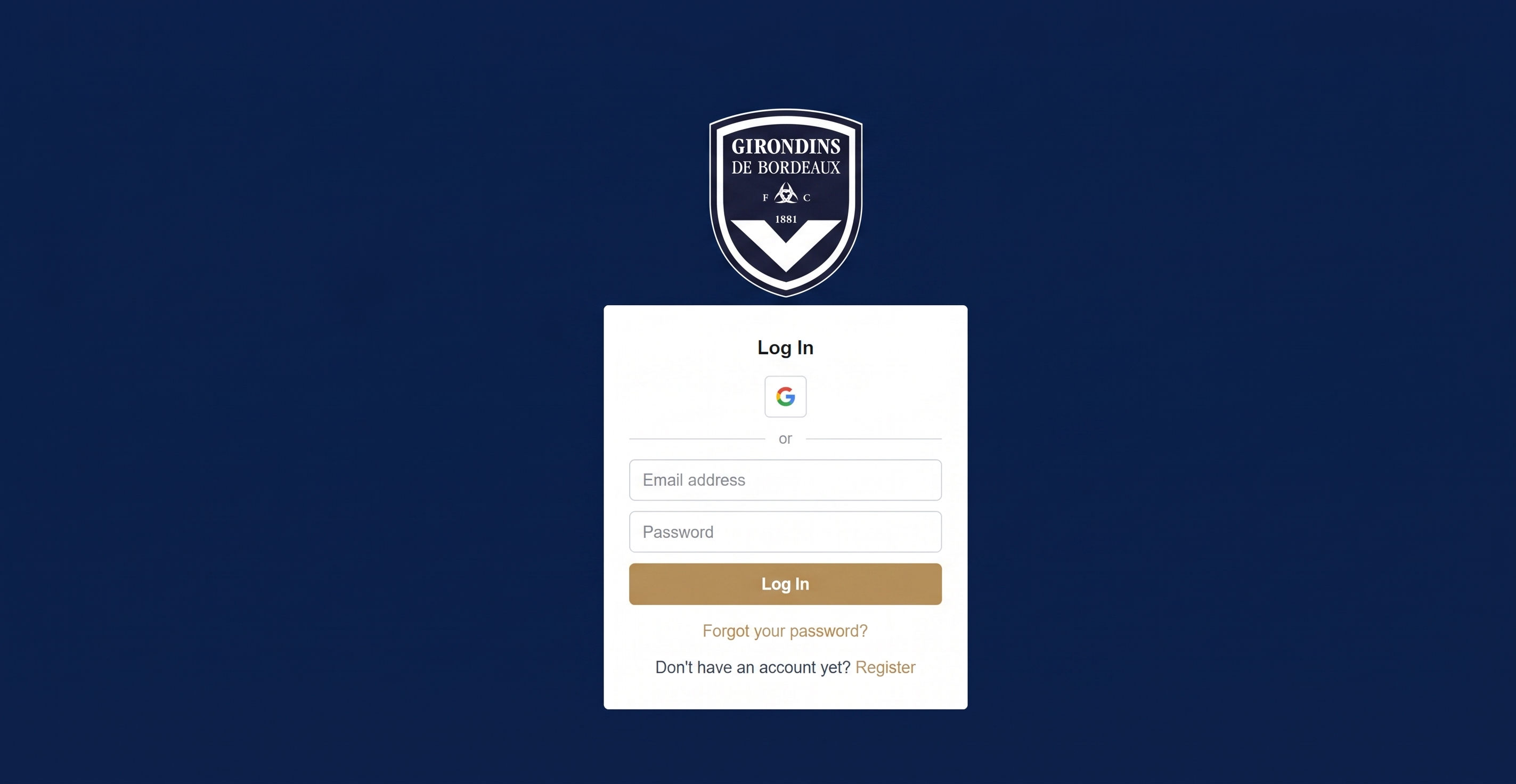
Girondins de Bordeaux - a Hosted Page with basic customization: brand logo and background color.
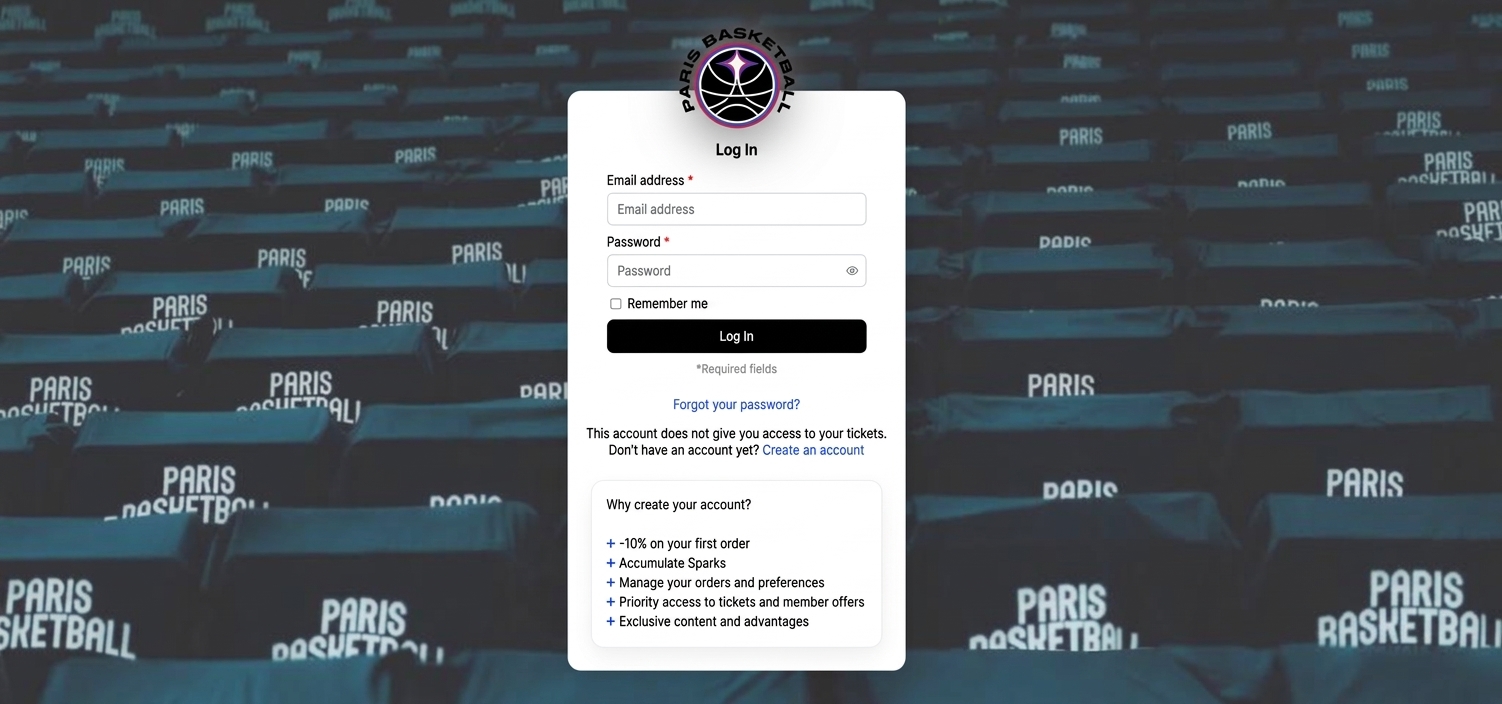
Paris Basketball - a deeply customized Hosted Page (CSS/JS): dedicated background image, reassurance message and highlighting of account benefits.
This gradation allows an organization to start very quickly with a functional page with or without internal resources and with varying degrees of advanced customization.
Delegating this component to a business expert means gaining autonomy and efficiency: autonomy because the brand no longer needs to rely on a development project to evolve its authentication journey and efficiency because this evolution happens in significantly less time compared to an end-to-end coded integration.
Activating a Hosted Page requires almost no front-end development. A project manager or a designer comfortable with CSS can configure and adjust the page from the console in minutes without mobilizing a dedicated technical team. For the site visitor, the page remains hosted under the brand's domain but everything is managed on the Purse Identity side. This setup speed justifies a rapid return on investment as soon as the solution is deployed.
When Purse Identity upgrades its product, Hosted Pages benefit natively. This is the case for adaptive check-in, an upcoming feature that will refine how a customer authenticates based on their profile: it will be directly available in Hosted Pages upon release with nothing to develop on the brand's side. Integrating a new feature then means activating it from the brand's Purse Identity workspace rather than leading a full-fledged code integration project. Conversely, an SDK integration would require building the API calls and the necessary front-end pages yourself to take advantage of it.
Hosted Pages natively integrate several protection mechanisms: multi-factor authentication (MFA) journeys, captchas as well as invisible features for the user like Data Breach Detection or Identity Fraud Protection.Because they remain within the Purse Identity technical scope, Hosted Pages also benefit from resilience against the most common attacks such as DDoS (Distributed Denial of Service) attacks.
Hosted directly by Purse Identity, Hosted Pages rely on an infrastructure capable of quickly absorbing a surge in load. This is a major asset for a brand: the login page, as a highly solicited gateway, must both sort legitimate traffic from malicious traffic and continue to handle the load including during traffic spikes.
More and more brands, including technically well-equipped ones, are making this choice today. This is a sign that integration simplicity is now becoming a standalone asset regardless of the organization's size.
Hosted Pages initially appealed for their convenience: an authentication page available in minutes without a development project. Their recent advancements in customization change the situation: they are no longer just an easy way out but a fully-fledged option combining activation simplicity and usage flexibility.
This evolution is gradually making it a benchmark for brands looking to combine two benefits: the autonomy to manage and evolve their authentication journey without depending on a technical project and the efficiency of a fast deployment regardless of the starting point.
As usages progress, Hosted Pages are establishing themselves as an integration method for any brand wanting to combine speed and quality of experience.

Find answers to the most common questions.
These are three levels of authentication flow integration, ranging from the most autonomous for the brand (Core SDK) to the fastest to deploy (Hosted Pages). The choice depends on available technical resources and the level of customization required.
Yes. Beyond the logo and background color configurable from the console, Hosted Pages support custom style sheets (CSS) and scripts (JavaScript) for advanced visual styling.
A few minutes, once configured from the Purse Identity console, with no front-end development required.
Yes. While this integration method initially appealed to organizations without dedicated development teams, its customization capabilities have made it a choice now adopted by brands that have their own technical resources as well.